
If you quickly want to get in touch with us, send a message and we will get back to you as soon as we can. You can also call us +46 418-44 99 20.
Smoother Transplanting with FiberCell
Published: 20/10 2026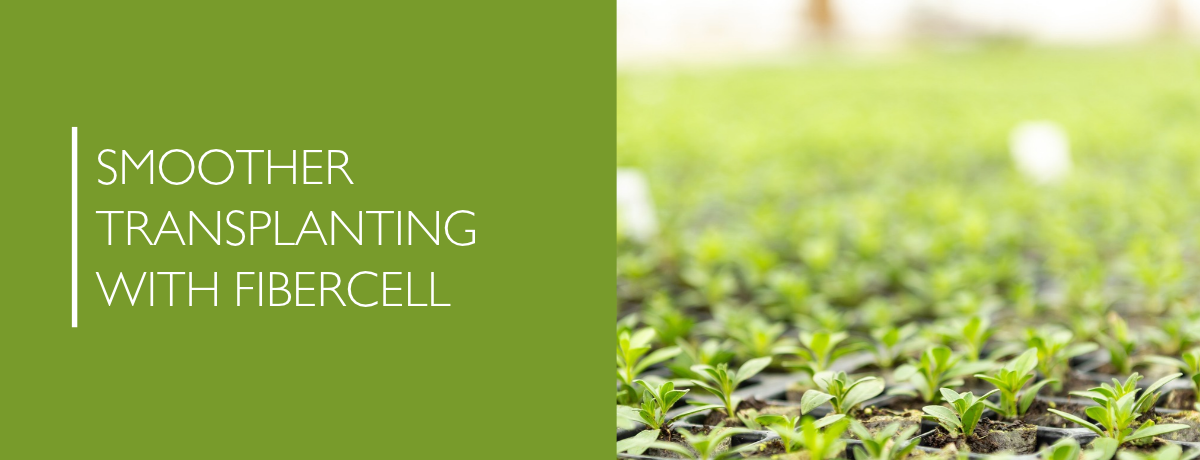
Reducing Transplant Shock with FiberCell Paper-Based Growing Systems
Transplanting is one of the most critical stages in plant production. No matter how well a seedling has grown in the nursery, its future performance depends on how successfully it adapts to its new environment. Unfortunately, traditional transplanting methods often expose roots to stress, damage, and disturbance, resulting in what growers commonly refer to as transplant shock.
FiberCell paper-based growing systems can help minimize transplant shock by supporting and protecting the root system throughout propagation and transplanting. By reducing root disturbance during handling, plants may establish faster and continue growing with less interruption after transplanting. These benefits are highlighted throughout BCC’s FiberCell concept, where seedlings remain supported by the paper cell during handling and transplanting.
What Causes Transplant Shock?
Transplant shock occurs when roots are disturbed during transplanting. In conventional systems, plants are often removed from containers or trays, exposing roots to air, drying, mechanical damage, and sudden environmental changes.
Common symptoms include:
-
Slowed growth after transplanting
-
Wilting and water stress
-
Delayed establishment
-
Reduced root growth
-
Uneven crop development
For commercial growers and nurseries, these setbacks can increase production costs and reduce overall plant quality.
A Different Approach
FiberCell uses a paper-based growing cell that supports and protects the root plug throughout production. Instead of removing the plant from a pot or container during transplanting, the paper cell remains around the root system and is transplanted together with the seedling. This minimizes root disturbance and helps maintain root integrity during the transition to its new growing environment.
Because the root system remains intact, plants can continue their development with less interruption and stress.
Healthier Roots Through Air Pruning
One of the key advantages of the FiberCell system is its ability to support natural air pruning. When roots reach the edge of the paper cell and are exposed to air, root tips naturally stop elongating and instead stimulate the development of lateral roots. This creates a dense and fibrous root system rather than long, circling roots.
A well-developed root system provides several benefits after transplanting:
-
Faster water uptake
-
Improved nutrient absorption
-
Better anchorage in the soil
-
Increased resilience to environmental stress
As a result, plants establish more quickly and continue growing with minimal setback.
Faster Establishment in the Field
When seedlings are transplanted with an intact root plug, they can begin exploring the surrounding soil immediately. The paper support helps protect roots during handling, transportation, and planting while allowing roots to continue developing after transplanting. The natural degradation of the paper ensures that roots can expand and establish themselves without long-term restrictions.
This combination of root protection and gradual paper degradation creates favorable conditions for rapid establishment and uniform growth.
Proven Benefits Across Multiple Crops
FiberCell paper is used in the propagation of a wide range of crops, including forestry seedlings, fruits, berries, citrus plants, ornamentals, herbs, and vegetables. Growers benefit from stronger root systems, easier handling, and improved plant establishment after transplanting.
Growing Stronger Plants from the Start
A successful crop begins with a healthy root system. By reducing root disturbance, encouraging air pruning, and allowing the plant to be transplanted together with its paper cell, FiberCell can help growers minimize transplant shock and improve establishment rates.