


If you quickly want to get in touch with us, send a message and we will get back to you as soon as we can. You can also call us +46 418-44 99 20.
Horticulture vs Floriculture
Published: 18/08 2026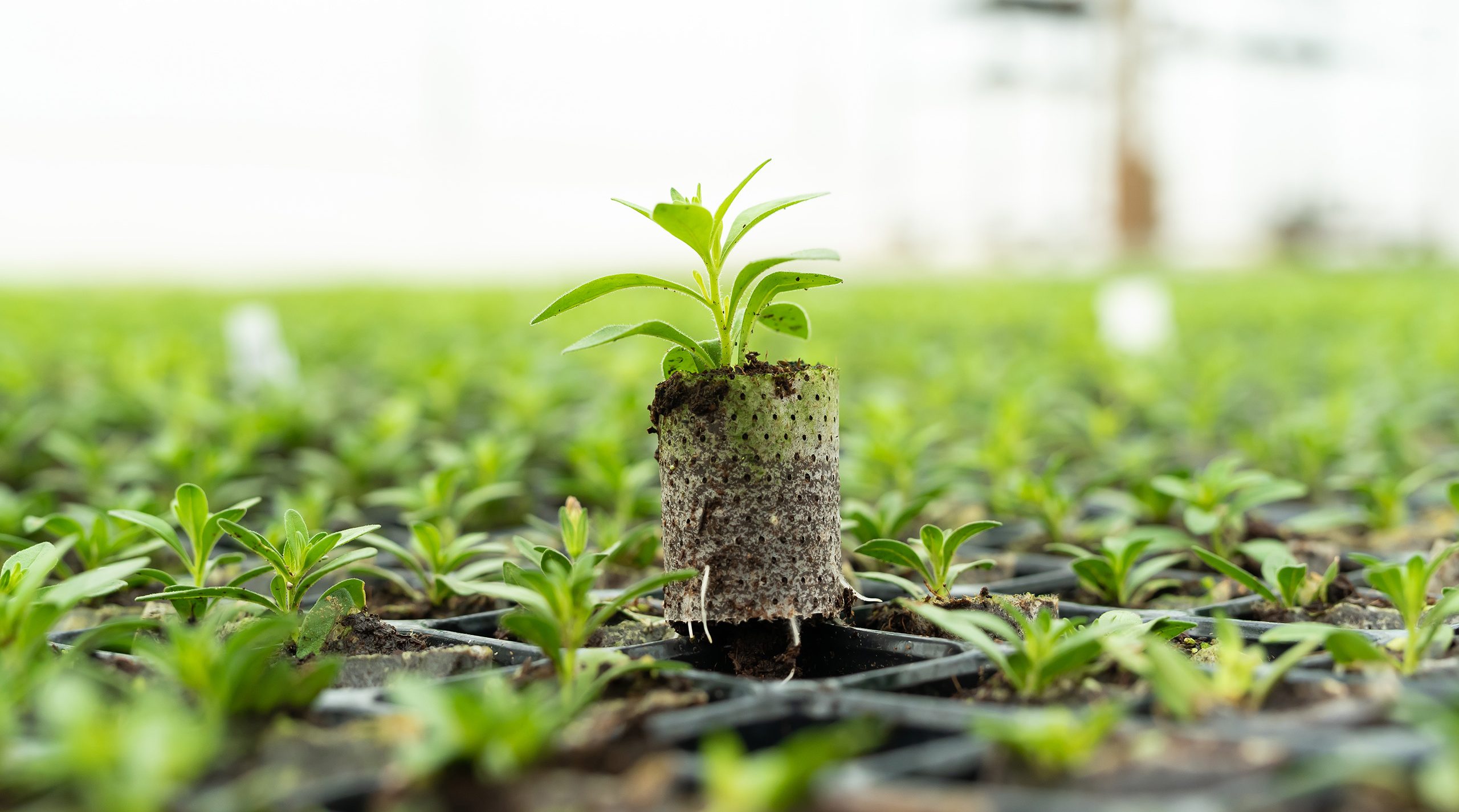
Horticulture and floriculture are closely related—but they are not the same thing. For anyone running a nursery, managing a greenhouse, or investing in propagation equipment, understanding what is the difference between horticulture and floriculture determines which growing systems, workflows, and production strategies fit your operation.
The short version: horticulture is the broad discipline covering all intensive plant cultivation—food crops, forest seedlings, ornamentals, and landscape plants. Floriculture is one specialized branch within it, focused entirely on flowering and ornamental plant production. The products, production methods, and market dynamics differ enough that the distinction matters when you are selecting equipment, configuring your propagation lines, or planning seasonal production cycles.
This guide breaks down both fields, compares them side by side, and explains how they connect in practice. For the broader picture of how horticulture fits within the world of farming, see our pillar article on agriculture vs horticulture.
What Is Horticulture?
Horticulture is the science and business of cultivating plants at an intensive, plant-level scale. Unlike broad-scale agriculture—which focuses on commodity crops and livestock across massive acreage—horticulture zeroes in on quality, precision, and controlled growing environments.
The field spans five core production areas, each with its own growing requirements, equipment needs, and market dynamics:
- Pomology: Fruit and nut production—orchards, citrus farms, and berry operations where root quality at the nursery stage directly determines orchard performance years later.
- Olericulture: Vegetable production, from commercial greenhouse tomato operations to field-grown leafy greens. Propagation quality and transplant health are critical to crop consistency.
- Floriculture: Flowering and ornamental plant production—the focus of this article.
- Landscape Horticulture: Design, installation, and maintenance of outdoor environments for commercial, municipal, and residential use.
- Nursery Production: The propagation and raising of seedlings, cuttings, and young plants for sale to growers, landscapers, and reforestation programs. This is where growing system design—holder trays, paper-based containers, filling equipment, substrate handling—has the most direct impact on downstream results.
What unifies all five branches is the intensive, hands-on approach to plant management. Horticulturists control environmental variables—temperature, humidity, light, substrate composition, and irrigation—to maximize plant quality and production efficiency. This precision is why horticultural operations invest in purpose-built growing systems rather than the bulk equipment used in field-scale agriculture.
What Is Floriculture?
Floriculture is the branch of horticulture dedicated to growing flowering and ornamental plants for commercial sale. It is a multi-billion-dollar global industry driven by demand for cut flowers, potted plants, bedding stock, and foliage—products where visual quality, color consistency, and shelf life define market value.
Core Product Categories
Cut flowers: Roses, tulips, sunflowers, and lilies grown for bouquets, floral arrangements, and event decoration. Major production hubs include the Netherlands, Colombia, Kenya, and Ecuador, with global supply chains shipping perishable products under strict cold-chain requirements.
Potted flowering plants: Orchids, poinsettias, chrysanthemums, and African violets produced in controlled greenhouse environments. These crops require precise temperature, light, and irrigation management to reach retail-ready quality—making growing system consistency critical.
Bedding and garden plants: Annuals and perennials—petunias, marigolds, impatiens, lavender—grown in plug trays and cell packs for home gardeners and landscape contractors. High-volume plug production depends on fast, reliable propagation systems that deliver uniform substrate filling and consistent root development across every tray.
Foliage plants: Ornamentals grown for their leaves rather than flowers—ferns, palms, philodendrons, succulents—used in residential, commercial, and hospitality interiors.
What Sets Floriculture Apart
Where a pomologist measures success in yield per tree and fruit sugar content, a floriculturist measures success in petal color uniformity, stem length consistency, vase life in days, and visual impact at point of sale. The product’s aesthetic quality is the product. This demands extremely consistent growing conditions from propagation through harvest—and that consistency starts with the growing system.
Horticulture vs Floriculture: Key Differences
| Factor | Horticulture | Floriculture |
| Scope | Broad: fruits, vegetables, flowers, forest plants, landscapes | Narrow: flowering and ornamental plants only |
| Relationship | The parent discipline | One of five specialized branches |
| Primary products | Food crops, forest seedlings, ornamental plants, landscape designs | Cut flowers, potted plants, bedding stock, foliage |
| Success metrics | Yield, plant health, root quality, transplant survival | Color consistency, vase life, stem uniformity, visual impact |
| Growing environments | Greenhouses, nurseries, orchards, fields, urban gardens | Primarily greenhouses and controlled environments |
| Seasonality | Varies by branch—some year-round | Highly seasonal peaks (Valentine’s, Mother’s Day, weddings) |
| Propagation | Paper pots, plug trays, containers matched to crop rotation | High-volume plug production; fast-degrading papers for shorter cycles |
| Market | Food supply, nursery trade, forestry, landscaping | Floral industry, events, retail, interior design |
Growing Systems in Floriculture Production
Floriculture’s emphasis on aesthetic quality and tight production schedules makes growing system design especially important. Every stage of production—from propagation through greenhouse growing to harvest and post-harvest—depends on consistency.
Propagation: Floriculture operations typically propagate at high volumes, producing thousands of plugs per run in standardized holder trays. Paper-based growing containers offer advantages here: they support uniform root development across every cell in the tray, regulate moisture consistently, and degrade naturally—eliminating the need for depotting before transplant. For short-rotation ornamental crops, fast-degrading paper grades (2-to-6-month profiles) match production timelines while allowing roots to grow through the container wall without circling.
Filling and substrate: Consistent substrate density across every paper pot in every tray is critical for uniform germination and root development. Automated filling machines remove this variable—delivering calibrated substrate volumes at production speed, reducing manual labor, and eliminating the tray-to-tray inconsistency that undermines crop uniformity.
Greenhouse management: Floriculture crops spend most of their lifecycle in controlled environments where temperature, humidity, light, and irrigation are managed at the zone or bench level. The growing system has to integrate cleanly into this infrastructure—trays that fit standard bench widths, papers that perform consistently under overhead irrigation, and container formats compatible with automated transplanting and sorting equipment.
Conclusion
Horticulture is the broad discipline. Floriculture is its most visually driven, time-sensitive, and aesthetically demanding branch. Both share a dependence on controlled environments, precision cultivation, and growing systems that deliver consistency at every stage—from the propagation tray to the finished product.
For floriculture operations, the growing system is not a commodity input. It is the foundation of crop quality, production efficiency, and seasonal reliability. Paper-based containers, purpose-built holder trays, automated filling equipment, and substrate systems engineered for high-volume plug production exist because floriculture demands consistency that manual methods and generic containers cannot deliver.
Selecting the right system starts with understanding what your crop requires—and matching your propagation infrastructure to those requirements.
Frequently Asked Questions
Is floriculture a type of horticulture?
Yes. Floriculture is one of five major branches of horticulture, alongside pomology (fruits), olericulture (vegetables), landscape horticulture, and nursery production. All floriculture is horticulture, but horticulture covers a much broader range of plant cultivation.
What growing systems are used in floriculture?
Floriculture operations use plug trays with paper-based or plastic containers, automated filling machines, precision irrigation, greenhouse climate control systems, and transplanting equipment. Paper-based growing systems are increasingly adopted because they support natural root development, eliminate depotting, and reduce plastic waste—while matching the fast production cycles typical of ornamental crops.
What is the difference between floriculture and floral design?
Floriculture is the production side: growing flowering plants through propagation, greenhouse management, and breeding. Floral design is the creative side: arranging cut flowers and foliage into bouquets, centerpieces, and installations. A floriculturist grows the product; a floral designer arranges it. Some professionals work across both, but they are distinct disciplines with different skill sets and equipment requirements.
Why do some floriculture operations use paper-based propagation?
Paper-based containers promote natural root development by allowing roots to grow through the degrading paper wall, eliminating circling and transplant shock. They come in different degradation profiles—fast (2-6 months), medium (5-10 months), and slow (8 and further)—so growers can match the container to their specific crop rotation. They also eliminate the need for plastic pot disposal, cleaning, and storage, reducing operational cost and environmental impact.