

If you quickly want to get in touch with us, send a message and we will get back to you as soon as we can. You can also call us +46 418-44 99 20.
What Is Air Pruning – and Why Is It Beneficial for Plant Growth?
Published: 10/03 2026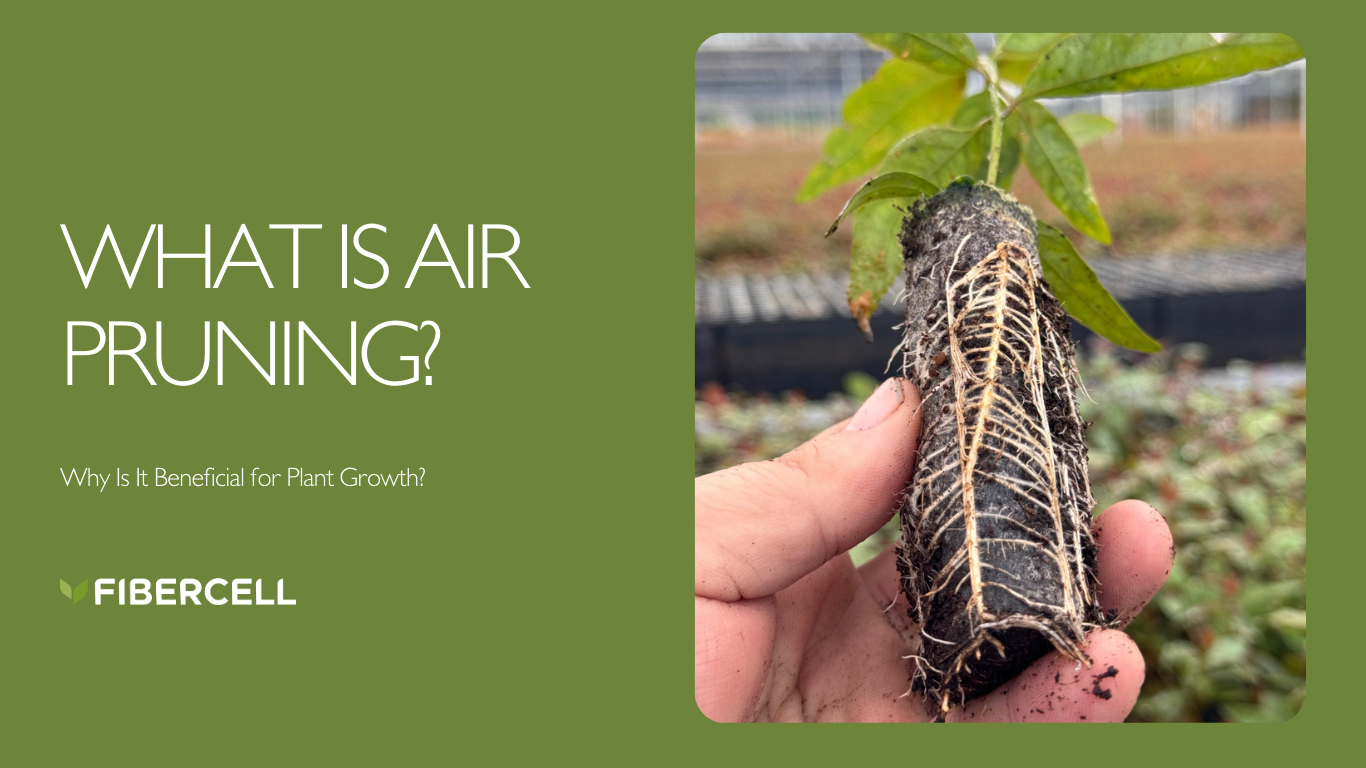
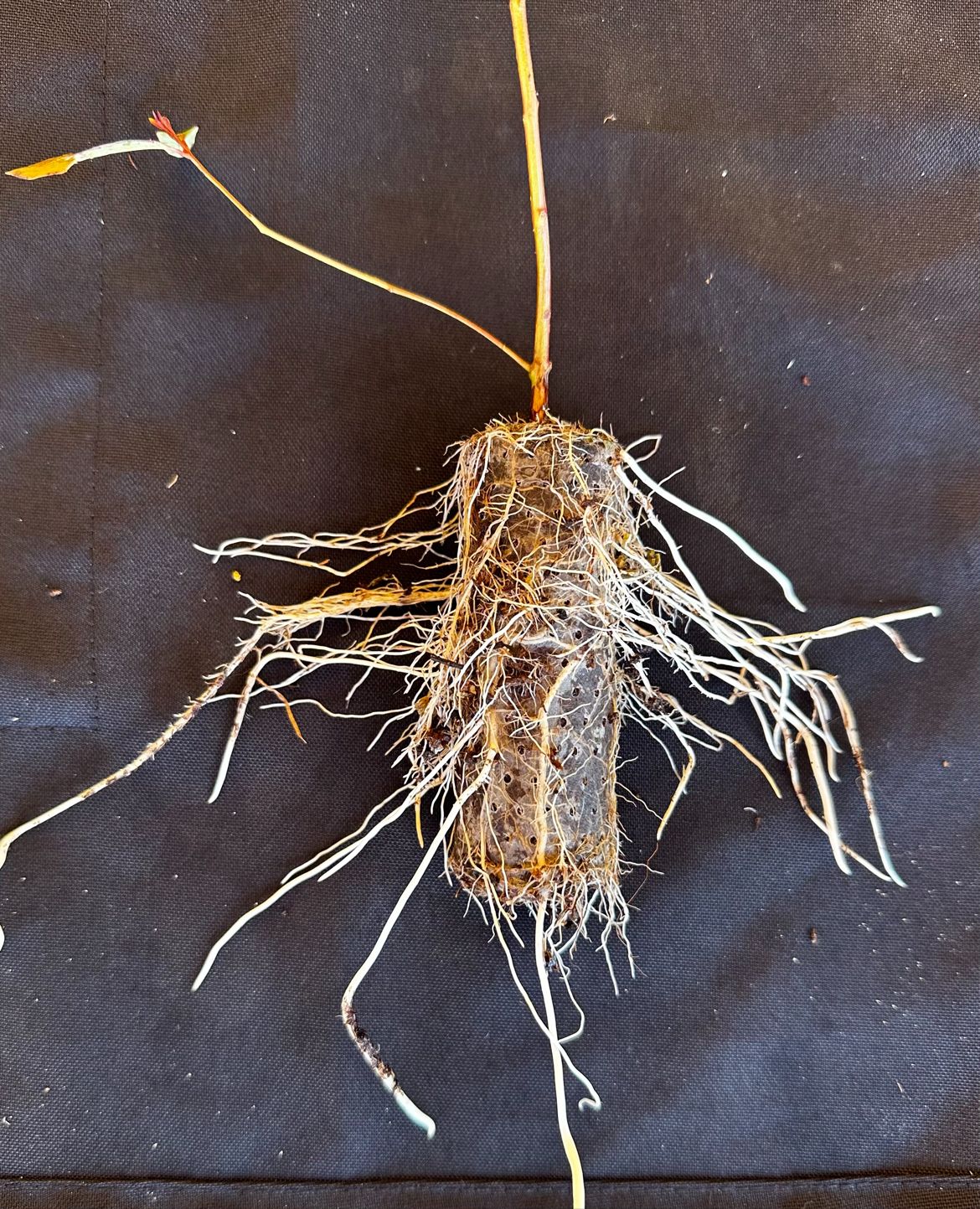
Air pruning is an advanced horticultural technique that naturally enhances root development by exposing root tips to air. When a growing root reaches the edge of a container or paper plug where it encounters dry air, the root tip dehydrates and stops elongating. Instead of continuing to grow in circles (as often happens in traditional plastic pots), the plant responds by producing multiple lateral roots behind the pruned tip.
The result is a denser, more fibrous, and highly efficient root system.
Why Air Pruning Matters
In conventional containers, roots often hit the pot wall and begin circling. Over time, this can lead to root binding, reduced nutrient uptake, transplant shock, and weaker plant establishment. For this reason, it is advantageous to grow plants in container systems with built-in side slits like our BCC growing containers or in growing systems like FiberCell.
Advantages with air pruning:
1. Stronger Root Architecture: Instead of long, circling roots, plants develop a compact network of fine feeder roots. These fine roots are responsible for absorbing most of the water and nutrients.
2. Improved Nutrient and Water Uptake: A fibrous root system dramatically increases surface area, improving efficiency in nutrient and moisture absorption.
3. Reduced Transplant Shock: Because the root system is well-branched and not root-bound, plants establish more quickly after transplanting.
4. Better Oxygenation: Air exposure increases oxygen levels in the root zone, reducing the risk of root diseases and improving overall plant vitality.
In short, air pruning helps plants develop the type of root system they would naturally form in healthy soil conditions.
Air Pruning in the FiberCell System
Air pruning becomes even more powerful when integrated into smart propagation systems like FiberCell.
The unique structure of the FiberCell paper allows natural air exchange at the root zone. When roots grow toward the paper boundary, they are naturally air-pruned, stimulating lateral root branching instead of root circling.
This means that FiberCell actively supports:
- Natural air pruning without mechanical intervention
- Dense, fibrous root systems
- Faster and stronger plant establishment
- Reduced transplant stress
- Efficient nutrient uptake
Unlike traditional plastic propagation systems, FiberCell’s degradable paper material creates an ideal microenvironment for root development while also aligning with environmentally responsible production practices.
Why FiberCell Makes a Difference
FiberCell is more than just a container material — it is a root-optimization system. By combining air pruning with a sustainable paper-based design, FiberCell enables growers to produce stronger, healthier plants with improved transplant performance. For nurseries, greenhouse growers, and professional propagators, this translates into higher-quality plants, better survival rates, and more consistent results.